Skip to content
Frank Young

Application development · user experience · systems · prototyping

Form & function .

Twenty years spent where product thinking meets the front end — turning functional requirements into well-built UI that goes the extra mile.

Most recently
Staff Frontend Engineer, ChargePoint — Fleet Charging
Previously
Tesla, Kaiser Permanente, Power-One / ABB, Fat Spaniel
Focus
The intersection of creative and frontend engineering
Status
Open to new work

About

I care less about which framework is on the page than whether the thing works for the person using it. Most of my career has been spent on products where that distinction matters — tools where a wrong number, a buried control, or an unreadable table has a real cost on the other side of the screen.

At ChargePoint I led front-end architecture for the Fleet Charging platform. Charging is a scheduling problem wearing a hardware costume: limited power, competing vehicles, tariffs with seasonal and critical-peak rules, equipment that fails at inconvenient moments. Real-time updates and intuitive thoughtful UX make the difference between running blind and running a tight ship.

Before that I was a lead on Tesla's vehicle configurator team. We were responsible for the discovery and configuration flows customers used across 40-plus markets. Different domain, same shape — a great many constraints underneath, and an interface that had to feel simple even though it was anything but.

I work across the stack when it helps, know my way around design tools like Figma, and treat accessibility as part of the definition of done rather than a late audit. I build with AI in the loop daily — spec-first, planning, brainstorming, prototyping, refactoring; I've also build LLM-enhanced features that are vendor-neutral, tunable, cost-tracked, and grounded in real data.

Work

Every role on this list had a progress bar or spinner that I got sick of looking at. I have some opinions.

2021–2026

ChargePoint

Staff Frontend Engineer

Led front-end architecture for the fleet charging platform, partnering with product and design from sketch to production.

  • Designed and built the Depot Map Designer — an interactive tool letting customers build EV charger maps and visualize real-time charging operations.
  • Built reusable UI patterns, accessible components, drag-and-drop tables, and schema-driven forms adopted across multiple front-end teams.
  • Turned complex real-time data into clear dashboards and decision-support interfaces.
  • Mentored engineers; shaped front-end architecture, code quality, and accessibility practice.

React · TypeScript · Tailwind · TanStack Query · AWS · Docker · WCAG

2020–2021

Kaiser Permanente

UI Architect
  • Sole front-end engineer on a greenfield inventory app managing thousands of clinic touchscreen devices used for video visits — which became critical infrastructure during the pandemic.
  • Defined the UX flows, produced the wireframes and mockups, then built the React/TypeScript front end and the Node APIs behind it.

React · TypeScript · Node · UX Design

2019–2020

Freelance / Contract

Applications Developer
  • React, Next.js, Node.js and CMS applications for Chegg, Experian, and other high-growth technology companies.

React · Next.js · Node · CMS

2015–2019

Tesla

Senior Applications Developer
  • Tech lead on Tesla's vehicle configurator — consumer-facing discovery, customization and purchase, shipped across global markets.
  • Built A/B testing and controlled-rollout workflows with LaunchDarkly, letting teams test consumer experiences and ship changes incrementally across markets.
  • Partnered with design, product, localization and accessibility on brand-critical commerce experiences.

React · Redux · Node · Express · ElasticSearch

2010–2014

Power-One / ABB

User Experience Engineer
  • Led a small front-end team building reporting and data-visualization interfaces for solar and wind monitoring — UX design and development in one role.

Data Visualization · UX Design · JavaScript

2008–2011

Fat Spaniel Technologies

Web Application Engineer
  • Led UI development and UX design for an energy monitoring platform — dashboards, charts and reporting tools.
  • Helped move the product off Adobe Flex and Flash and onto HTML5/CSS3.

Adobe Flex · HTML5 · CSS3 · Data Viz · UX Design

2005–2009

Protrigga Design

Partner · Interactive Advertising

A two-person interactive agency. I was the entire technical half - Bela Spohrer was the design half. Go check out his work https://bela-sf.com/

  • Built Flash campaign sites for Warner Bros. Records — deeply interactive artist and release sites with embedded music players and cinematic scenes.
  • Motion and audio were the medium, not decoration: the whole experience was timeline, sound and state.

Flash · Motion · Audio · Interactive Advertising

2002–2006

Earlier roles

Advertising, education, government

Where the interactive and motion work started.

  • CaratFusion — Senior Flash / PHP / JavaScript Developer. Agency-side interactive advertising; animation and motion-driven brand experiences. · 2005–2006
  • Academy of Art University — Instructional Designer. Developed course content with instructors and an editorial team, and built the animated interactive elements, quizzes, tests and video for online modules. · 2004–2005
  • County of Humboldt — Senior Applications Developer. Government web applications. · 2002–2004
  • College of the Redwoods — Associate Faculty. Taught web design and development, which is where I learned to explain a system. · 2002–2003

Flash · PHP · JavaScript · Instructional Design

Selected Projects

Things I recently built end to end. — Concept, design, execution, launch.
Project 01 — 2025–2026

The Crumb

A bake journal that reads your loaf and tells you what the crumb means.
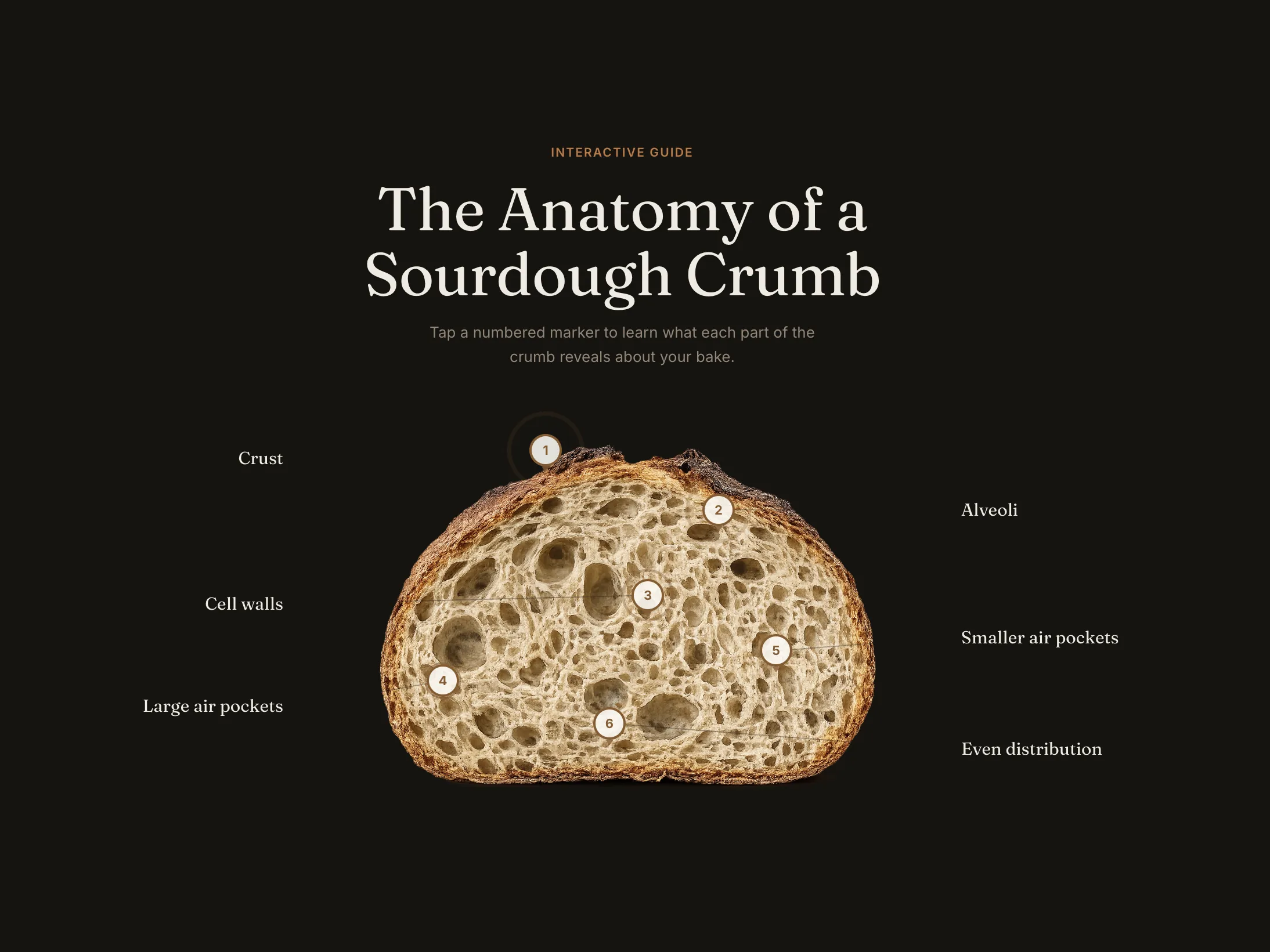
Sourdough has a slow feedback loop — change one variable, wait, observe, repeat. For new bakers it can be overwhelming and hard to know what went wrong when your loaf doesn't turn out as expected. With TheCrumb, users can log a bake, photograph the loaf, and get a structured read on timing, fermentation, crust and shaping, scored against the numbers, starter, and ingredients you actually used. in addition to the journal, I build several useful educational baking related experiments — a fermentation activity curve, a live starter ecosystem, a bulk fermentation simulator — that help explain why the loaf turned out the way it did. Owned product from start to finish. Product, design, front end, backend and deployment.

The problem

A million things can go wrong when you bake sourdough. Advice online is confident, contradictory and untethered from your kitchen. Not everyone has a friend who bakes sourdough they can call. The Crumb closes it.

Product decisions

The verdict is always tied to the bake's own variables, never generic advice. Scores are coarse on purpose — out of ten, four axes — so the tool reads as a second opinion, not a grade.

Tech

Claude Vision reads the crumb photos against the logged parameters. React and Tailwind front end, Hono API, PostgreSQL, deployed on Railway in Docker.

Claude Vision · React · Tailwind · Hono · PostgreSQL · Railway · Docker

Visit thecrumb.app (opens in a new tab)
Landing — tools for curious bakers
First run — two of the three setup steps are marked optional, and the one that produces a diagnosis is marked start here
Bake detail — photos and the variables behind them
Analysis — verdict, fermentation read, four scores
Fermentation activity curve — temperature and starter percentage reshape the arc
Starter ecosystem — yeast and bacteria competing for sugar over 24 hours
Sign-in email

Project 02 — 2026

Sizer

Will your carry-on fit? Sizer answers the question for every airline, every bag, every leg of your trip.
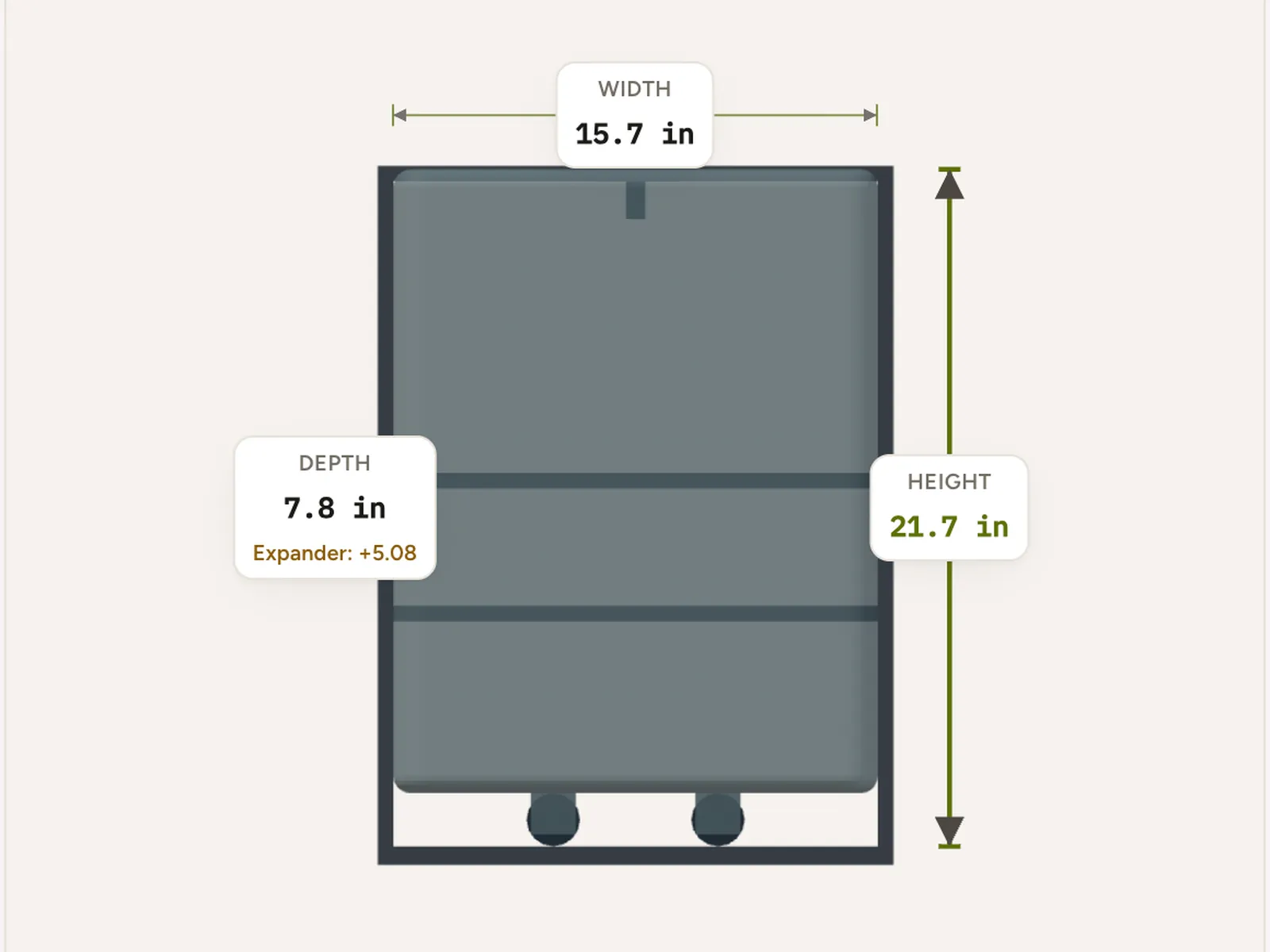
I was searching Google for a carry-on under 21 inches. It returned a 29-inch checked bag, a neck pillow, packing cubes, and a suitcase whose own listing gave three different sets of dimensions in three different places. I tried "EU cabin friendly" and was shown a golf travel case. Somewhere in there I stopped shopping and started taking notes. I discovered that "carry-on" is not a size. The airlines here publish seventeen different limits, from 40 cm to 61 cm on the longest side. And a product listing may or may not be counting the wheels, which are exactly the part a gate agent will measure. Sizer answers what the search box cannot: your bag, your airline, the fare you actually clicked, across a growing list of airlines and bags. It also names the leg of your trip that ruins it, which is never the leg you were worried about.

The problem

Everyone answering this question is trying to sell you a bag. The affiliate roundups copy dimensions off retail listings. The airlines publish the truth and then bury it three clicks into a fare table. Five of them sell a cheapest ticket that includes no cabin bag whatsoever, a detail they are in no rush to lead with. Nobody was answering the specific question, because answering there's no incentive to do so. I built Sizer to show the answer in a way that makes the gap between a brochure figure and a gate visible.

Product decisions

Establish trust. Make it beautiful, but not pretentious. Always show sources. Show links to the airline and bag manufacturers when available. Allow for custom bags. Keep the design clean and functional. Build something useful.

Process

I vibe coded this thing in less than a week. Step 1: Establish clear specs and product vision. Step 2: Establish design direction; generate a round of mockups. Step 3: Write technical specs and implementation plans that refer to mockups, Step 4: Iterate. Rinse. Repeat.

Tech

Astro with Preact islands, Tailwind, ThreeJS for the luggage visualization, deployed static to Cloudflare Workers. The sizing engine is a standalone module with over 600 tests!

Astro · TypeScript · Preact · Tailwind · Cloudflare Workers

Visit Sizer (opens in a new tab)
Landing — three ways in, because people arrive with different questions
Catalogue — shelved by how widely a bag fits, not by brand or price
Bag detail — the bag drawn inside the airline's own frame, wheels included
Trip checker — every leg, and the one that actually decides

Project 03 — 2026 · Launching soon

Vittles

Group meal planning for backpacking and camping trips.
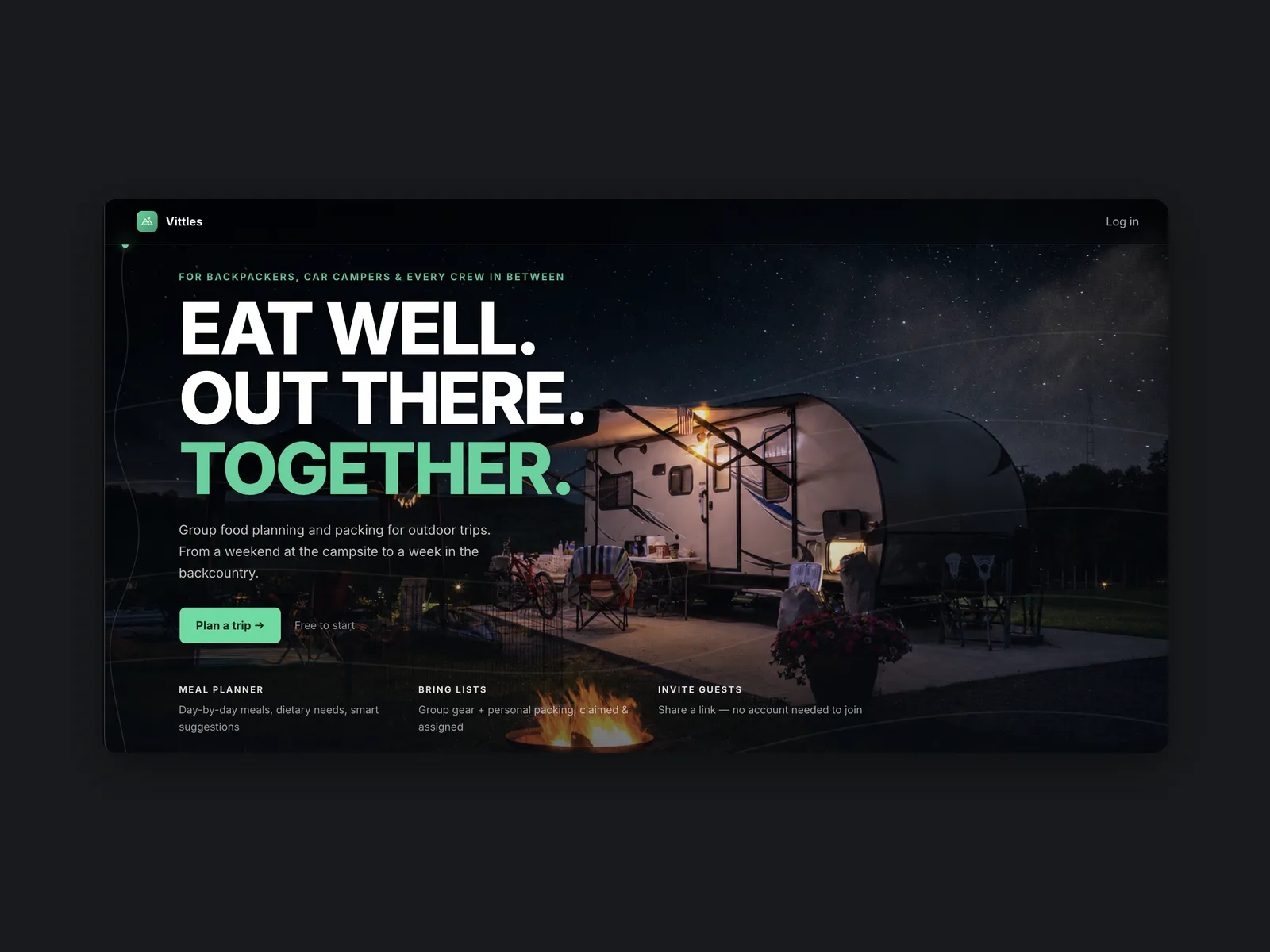
Feeding six people for four days in the backcountry is a scheduling problem with weight limits. Vittles lays the trip out day by day, generates meal plans with an LLM pipeline, scales portions to the crew, and keeps dietary needs applied across the whole plan rather than one meal at a time. Trips import from several formats, and the edges — error pages, empty states, transitions — got as much attention as the happy path. Solo build across a TypeScript monorepo, product design through deployment.

The problem

Trip food gets planned in a shared spreadsheet that nobody updates. Dietary restrictions get remembered at the trailhead, and somebody always carries too much.

Product decisions

Dietary needs are a property of the trip, not a filter on a recipe. Every recipe carries calories per ounce alongside calories per serving, because weight is the real currency.

Tech

React and TypeScript in a monorepo, Hono API, PostgreSQL, LLM pipelines for meal-plan generation and multi-format trip import.

React · TypeScript · Hono · PostgreSQL · LLM pipelines

Landing — for backpackers, car campers and every crew in between
The before — trip food lives in a group text until somebody unpacks at camp
Trip plan — meals laid out by day, scaled to the crew
Bring lists — group gear claimed by name, kept apart from personal packing
Onboarding — trip type first, because it changes every downstream constraint
Matching — three candidate trips scored against the constraints given
Recipe detail — calories per ounce sits beside calories per serving

Project 04 — 2024 · Unshipped experiment

MealTrip

Meal planning for every scenario at once. It got out of hand.

The idea started off reasonably. I wanted to make a group food planner that was more fun than a spreadsheet. I had just downloaded Claude and started jamming; one poorly defined prompt after another. It was so fun. Add a new feature. Animate some things that nobody expects to be animated. Pack the delightful interface elements in everywhere. It became one planner that could handle any eating situation — weeknights, dinner parties, road trips, backpacking, restrictions, budgets. Confetti. Animal sounds. Gamification for no good reason.Every scenario I added made the data model more general and the interface less usable, until the thing could describe any meal plan and help with none of them. I stopped before launch. Vittles is what that lesson turned into: a few scenarios taken seriously, and more niche. This project taught me an important lesson about scope, and that planning is more important than ever when you are using a generative model to build a product.

The problem

I got caught up in the newbie phase of ai magic. I chased novelty instead of product definition. I was so amazed that I could build things that would have previously taken me a week in a hour or two.

Product decisions

The useful decision was the one to stop. This project was part of the journey, a learning experience, not a product.

Tech

React, Tailwind, NextJS - deployed on Vercel

React · TypeScript · Node

Landing — one planner, pitched at every eating situation at once
Events — trips and parties share one model, which is where the trouble started
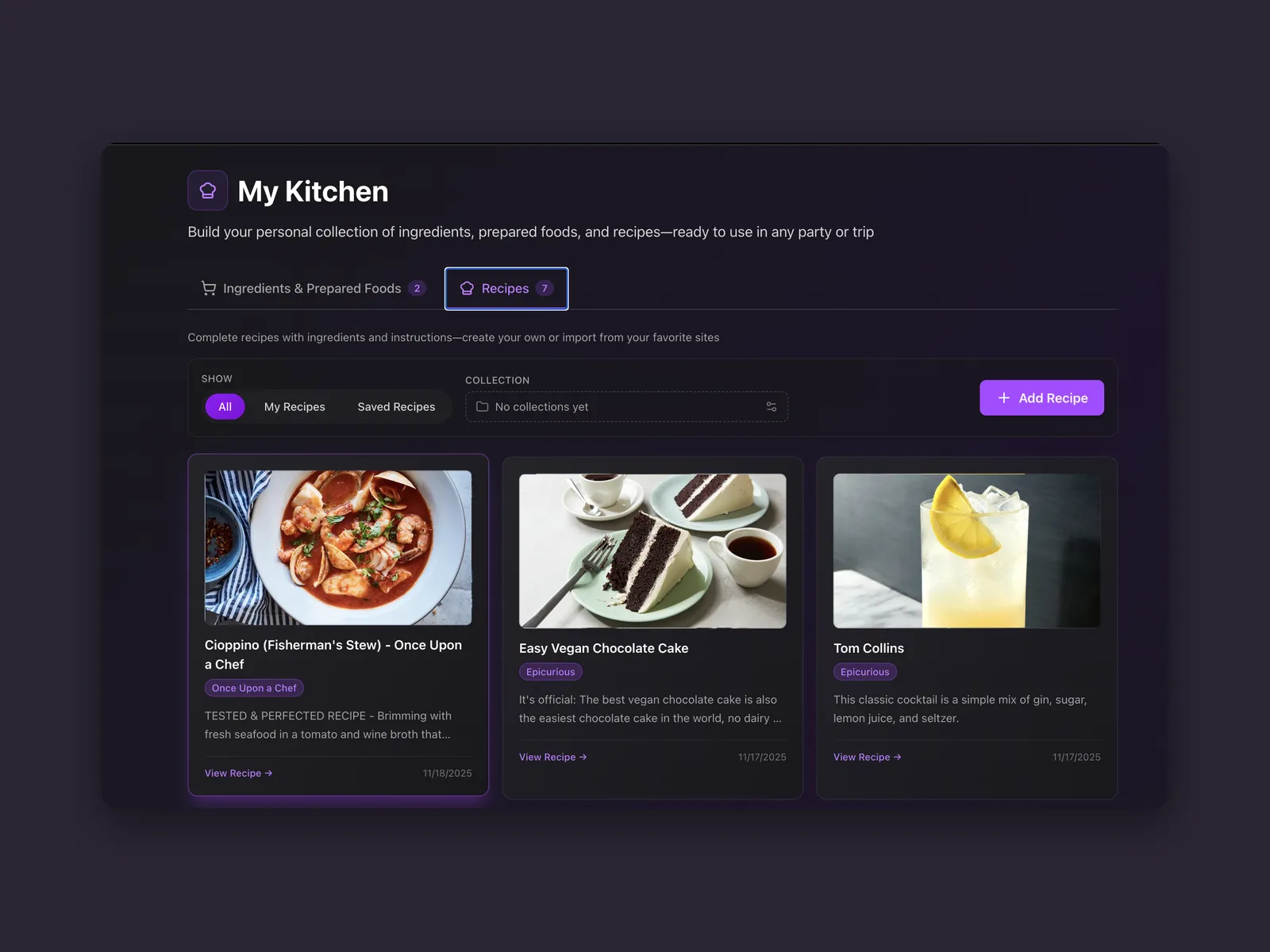
My Kitchen — a recipe library that exists independently of any trip
Dashboard — dietary compatibility across the library, reported before anything was planned

Explorations

Games, generative work, small experiments. No brief, no client, no deadlines, no stress.

Contact

Available to work: full-time, contract, or gig.

So I can write back.

Or find me at

LinkedIn
frank-young
Location
San Francisco Bay Area

Curriculum Vitae

The whole thing

Download PDF

Education

Humboldt State University
B.A. Physical Geography / GIS Minor: Environmental Ethics 2000
Humboldt State University
Graduate Certificate, GIS & Remote Sensing 2000
Contra Costa College
A.A. Interdisciplinary Studies 1997